Stair treads, risers, trim, and cabinetry get fixed with a mix of mechanical fasteners and adhesive on most jobs, and the adhesive half of that combination is frequently an afterthought whatever’s on the truck rather than something matched to the load, movement, and finish requirements of the specific joint.
Why This Joint Type Is Different From Flooring
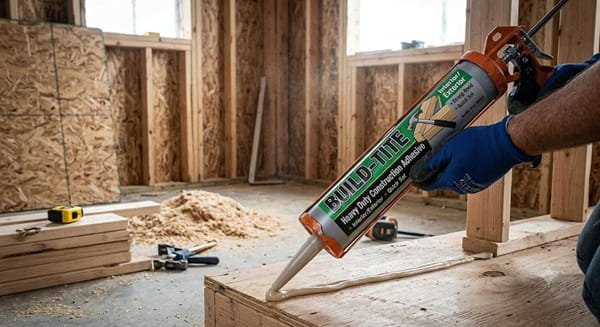
Construction adhesive selection for stairs, trim, and cabinetry differs from flooring adhesive in one important respect: these joints usually combine a genuine structural or semi-structural load (a stair tread has to hold repeated foot traffic, a cabinet has to hold its own weight plus contents) with a finish requirement (the glue line often can’t show, and the piece may need to be positioned and adjusted before it sets).
A flooring adhesive optimised purely for high bond strength across a large flat area isn’t necessarily the right match for a stair stringer joint that also needs some working time for alignment, or a cabinet installation where overspill has to be manageable without ruining the finish.
What to Actually Check Before Specifying
Three things matter more than raw bond strength on this joint type. Working time whether the adhesive allows enough open time to position and adjust a stair tread or cabinet panel before it grabs, versus a fast-grab formulation suited to a fixed, one-shot placement. Gap-filling capacity stair and trim substrates are rarely perfectly flat, and an adhesive with poor gap-filling leaves a weak, inconsistent bond line across an uneven surface. And substrate range timber, MDF, laminate, and sometimes metal brackets can all appear in the same staircase or cabinetry installation.
Where Under-Specification Shows Up
The common failure isn’t the adhesive letting go outright it’s a stair tread that develops a squeak or slight movement months after installation, traced back to an adhesive that didn’t fully gap-fill an uneven stringer, or that set before the tread was correctly seated. Because the mechanical fasteners are still holding the piece in place, the problem reads as a minor annoyance rather than the adhesive failure it actually is.
A Short Specification Check
Confirm the adhesive’s stated working time is enough for the installation method being used not just the manufacturer’s fastest-cure figure. Check gap-filling capacity against how flat the actual substrate is, particularly on older stair structures. And confirm the adhesive is rated for every substrate in the joint, since a stair or cabinetry installation frequently mixes timber, engineered board, and metal fixings in the same run.
Practical Takeaways
- Stair, trim, and cabinetry adhesive needs differ from flooring adhesive working time and finish matter alongside bond strength
- Poor gap-filling on an uneven stringer or substrate is a common, under-diagnosed cause of later squeaks and movement
- Confirm working time matches the actual installation method, not just the fastest cure figure on the data sheet
- Multi-substrate joints timber, board, metal brackets need an adhesive rated across the full mix
- A squeak or slight movement months after install is usually an adhesive gap-filling or timing issue, not a fastener issue
Where to Start
A stair adhesive with adequate working time and gap-filling capacity avoids the slow-developing movement issues that show up months after a stair or cabinetry install. First Sealant Technology’s LN-3700 First Bond is their construction-grade liquid nails adhesive, suited to both flooring substrates and general trim, stair, and cabinetry bonding.
For advice on working time and substrate compatibility for a specific stair or cabinetry job, their team can be reached at 096-818-9168, 097-959-5111, or 097-959-1222, Monday through Saturday, 08:30-17:30.
Technical specifications referenced above are drawn from the manufacturer’s published product information. Confirm substrate compatibility and suitability for your application directly with the supplier.