India has 7,500 kilometres of coastline, over 1,300 islands, 12 major ports, and hundreds of minor ports handling more than 1,400 million tonnes of cargo annually. The sea is not incidental to India’s economy. It is foundational.
Yet for decades, the full potential of India’s maritime geography remained underutilised. Shipping firms operated in silos, port infrastructure lagged global standards, and ocean-based industries beyond traditional cargo shipping received minimal policy attention.
The Blue Economy framework is changing this. It has given India’s maritime sector a strategic identity, a policy architecture, and an investment rationale that is reshaping how Indian shipping firms think, invest, and compete.
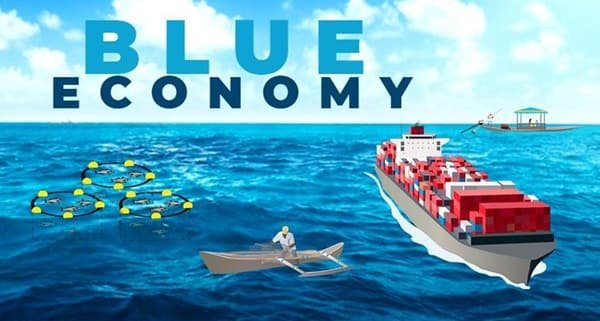
What the Blue Economy Actually Means
The Blue Economy refers to the sustainable use of ocean resources for economic growth, improved livelihoods, and ocean ecosystem health. It encompasses far more than traditional shipping.
It includes:
- Maritime trade and logistics
- Fisheries and aquaculture
- Offshore oil, gas, and renewable energy
- Coastal and marine tourism
- Seabed mining and deep-sea exploration
- Desalination and marine biotechnology
- Port-led industrialisation
India’s Blue Economy is estimated to contribute approximately 4% of GDP with significant potential to grow substantially by 2030, according to government projections.
For Indian shipping firms, this broader framework creates both direct business opportunities and an enabling policy environment that supports expansion.
The Policy Architecture Driving Change
Several government initiatives have provided the structural foundation for Blue Economy growth in India.
Sagarmala Programme
Launched in 2015, Sagarmala is the most comprehensive port-led development initiative in India’s history. It focuses on:
- Port modernisation and capacity expansion
- Port-led industrialisation through coastal economic zones
- Coastal community development
- Enhancing inland waterway connectivity
Over ₹6 lakh crore of projects have been identified under Sagarmala, many directly benefiting Indian shipping firms through better infrastructure, faster turnaround times, and new cargo corridors.
Maritime India Vision 2030 and Amrit Kaal Vision 2047
These strategic documents outline India’s ambition to become a top-ten global maritime nation. Key targets include:
- Doubling port capacity to handle 10,000 million metric tonnes by 2047
- Making India a global ship recycling hub
- Developing domestic shipbuilding capacity
- Promoting coastal shipping as an alternative to road and rail
Coastal Shipping Promotion
The government has been actively incentivising coastal shipping — the movement of cargo between Indian ports — as a cheaper, greener alternative to road transport. GST exemptions, cabotage relaxation for certain cargo, and infrastructure investment are making coastal routes more economically viable.
For Indian shipping companies, this creates a large, growing domestic market that was previously underserved.
How Indian Shipping Firms Are Responding
The Blue Economy framework is influencing strategic decisions at major Indian shipping players in several distinct ways.
Fleet Modernisation and Expansion
The Shipping Corporation of India (SCI), Essar Shipping, and newer players are investing in modern, fuel-efficient vessels that meet increasingly stringent international environmental standards.
The International Maritime Organization’s (IMO) Carbon Intensity Indicator (CII) regulations require ships to reduce carbon intensity annually. Indian firms are retrofitting older vessels and ordering new ones with LNG propulsion and energy-saving technologies to remain competitive in international markets.
Coastal and Inland Waterway Focus
The government’s push for coastal shipping has encouraged several firms to develop dedicated coastal fleets. These routes connecting major Indian ports — JNPT to Chennai, Paradip to Visakhapatnam, Kandla to Kochi — are becoming economically attractive as infrastructure improves.
The National Waterways expansion under the Jal Marg Vikas Project is opening river logistics as a complement to coastal routes, creating multimodal opportunities that shipping firms are beginning to exploit.
Port-Integrated Logistics
Forward-thinking Indian shipping firms are evolving from pure ship operators into integrated logistics providers. This means offering:
- Container handling and warehousing at ports
- Last-mile distribution networks
- Customs clearance and freight forwarding
- Cold chain logistics for perishable cargo
Adani Ports and Special Economic Zone (APSEZ), though primarily a port operator, exemplifies this evolution — controlling ports, logistics parks, shipping berths, and storage facilities in an integrated manner that pure shipping companies are now trying to replicate.
Offshore and Renewable Energy Services
India’s ambitious offshore wind energy targets — with potential for 30 GW by 2030 — are creating an entirely new market for specialised vessels. Installation vessels, cable-laying ships, crew transfer vessels, and maintenance support craft are all needed as offshore wind projects develop along India’s western and southern coasts.
Shipping firms with offshore services capabilities are positioning early in what could become a significant revenue stream.
Ship Recycling
Alang in Gujarat is already one of the world’s largest ship recycling yards. The Blue Economy framework and Hong Kong International Convention compliance requirements are pushing Alang towards cleaner, safer recycling practices.
For Indian shipping firms, compliance with global recycling standards opens the door to more international clients who need certified recycling destinations.
Challenges That Must Be Addressed
Despite the opportunity, Indian shipping firms face structural challenges that the Blue Economy framework alone cannot resolve.
Financing Constraints
Shipbuilding and fleet acquisition require large, long-tenure loans. Indian banks have historically been reluctant lenders to the shipping sector due to its cyclicality and asset-heavy nature. The cost of financing in India remains higher than global benchmarks, disadvantaging Indian firms against Chinese, South Korean, and European competitors.
Skilled Manpower
India produces a significant number of seafarers who serve on international vessels. But retaining this talent for Indian flag vessels at competitive international salaries is difficult. The skills required for modern LNG-powered vessels and offshore renewable energy support are in short supply domestically.
Cabotage Regulations
While the government has relaxed some cabotage restrictions, allowing foreign vessels to carry coastal cargo under specific conditions, the policy remains inconsistent. Full liberalisation would increase competition but also improve market efficiency.
Port Efficiency Gaps
Despite Sagarmala investments, several Indian ports still lag behind global benchmarks on turnaround times, digitalisation, and container handling productivity. Every hour a vessel waits at anchor is a direct cost to shipping firms.
Environmental Compliance Costs
Meeting IMO 2030 and 2050 decarbonisation targets requires substantial capital investment. Smaller Indian shipping firms without access to green finance face competitive disadvantage.
The Emerging Blue Finance Opportunity
One of the most interesting developments is the emergence of Blue Finance — dedicated capital for ocean-economy businesses meeting sustainability criteria.
International development finance institutions like the Asian Development Bank and the International Finance Corporation have established Blue Bond frameworks. These instruments fund sustainable shipping, clean port infrastructure, and coastal renewable energy.
Indian shipping firms that demonstrate credible environmental, social, and governance (ESG) practices are beginning to access this capital, which comes at lower rates than conventional financing.
The State Bank of India has already issued green bonds with some maritime application. As the Blue Finance framework matures in India, it could significantly ease the financing constraints that currently limit Indian shipping firm growth.
What the Next Decade Looks Like
The convergence of Sagarmala infrastructure, Blue Economy policy, IMO environmental standards, offshore renewable energy growth, and digitalisation of port logistics is creating a fundamentally different maritime business environment in India.
Shipping firms that survive and grow will be those that:
- Transition fleets to lower-carbon propulsion systems ahead of regulatory deadlines
- Integrate vertically into port logistics and supply chain services
- Develop offshore energy service capabilities
- Access Blue Finance for vessel acquisition and fleet modernisation
- Build digital capabilities for real-time cargo visibility and predictive maintenance
Firms that remain pure ship operators without environmental compliance roadmaps or logistics integration will face increasing margin pressure from global competition and domestic regulatory requirements.
Final Thoughts
The Blue Economy is not a slogan for Indian shipping. It is a structural reorientation of how the government, investors, and industry participants think about the ocean as an economic asset.
For Indian shipping firms, this reorientation creates genuine opportunity — in coastal trade, offshore energy, integrated logistics, and sustainable fleet operations. The firms that understand this shift and align their strategies accordingly will benefit from one of the most sustained periods of maritime infrastructure investment in India’s history.
India’s relationship with the sea has always been ancient and deep. The Blue Economy framework is giving that relationship a modern economic architecture worthy of the ocean’s potential.
FAQs
Q. What is the Sagarmala Programme and how does it help shipping firms?
Sagarmala is a government port-led development initiative that modernises ports, builds coastal economic zones, and improves inland connectivity, directly reducing shipping firms’ operating costs and expanding cargo volumes.
Q. How large is India’s Blue Economy currently?
It contributes approximately 4% of GDP, with significant government ambition to grow this share substantially by 2030 and 2047.
Q. What is cabotage and why does it matter for Indian shipping?
Cabotage is the right to carry cargo between domestic ports. Restricting it to Indian-flagged vessels protects domestic shipping firms but limits competition and efficiency.
Q. Are Indian shipping firms investing in green vessels?
Yes, though slowly. IMO regulations and access to Blue Finance are accelerating investment in LNG-powered and energy-efficient vessels.
Q. What is the significance of Alang for India’s Blue Economy?
Alang is one of the world’s largest ship recycling yards, and upgrading it to international environmental standards makes it a global hub while generating significant economic activity.
Q. How does offshore wind energy create opportunities for shipping firms?
Offshore wind installation and maintenance requires specialised vessels, creating a new market for Indian shipping firms with relevant fleet capabilities.
Q. Can retail investors participate in India’s Blue Economy growth?
Yes, indirectly through listed companies like APSEZ, Shipping Corporation of India, and port trusts that are listed on Indian exchanges.